Lamia
A poem by John Keats
A Battle of Emotion and Logic
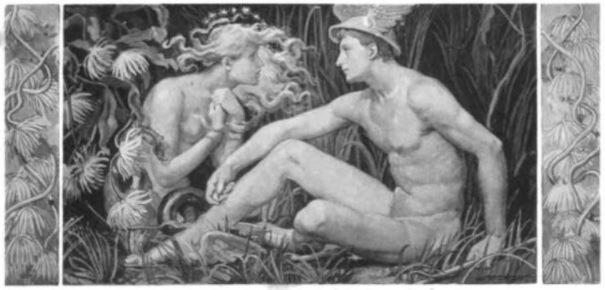
Lamia
The story of Lamia is one about love, but it is also about the war between logic and emotions. Logic and emotions have always been set against each other. You’re either logical or you’re emotional. Emotions cause people to act without thinking. Logic can make the hard choice because it removes obstacles like “love” and “care.”
In the poem “Lamia” by John Keats, it opens with the god Apollo, heartbroken because the nymph he was chasing has vanished. Lamia slithers up to him in snake form and asks him to take pity on her because she too loves someone, a young man named Lycius, and wishes to be with him. Finding a kinship with her because he recognizes her longing, Apollo grants her wish to become human, and she sets off to find her One True Love.
As if it is fate, Lycius crosses her path at just the right time. He is a student of an old sage named Apollonius, and has grown bored of the constant philosophical debates. He sees her and falls instantly in love, leaving logic behind.
After spending blissful days and nights in an otherworldly house, they decide to get married. Because the sage is someone important to him, Lycius invites Apollonius to the wedding. However, at the wedding, Apollonius rips into Lycius and Lamia’s love by tearing Lamia apart verbally in front of everyone. Like a daydream fading upon waking up, Lamia’s human form is broken and she vanishes.
It’s no mistake that Lycius is depicted as a young man. Youth is seen as innocent and impressionable, given to whims and easily gullible. Trapped between the fantasy of Lamia and the cynicism of the old sage Apollonius, Lycius acts as a young man who is growing up and loses his happiness to the cynicism of logic.
The question becomes this: which is right? Is it right for him to follow his heart, even if the one he loves is a lie? Is it better to be aware of every bitterness of the world and then view the world through only that lens? Because if you plan for the worst and only see the worst, you aren’t disappointed when it happens, right?
This is why I’ve chosen this section of the poem, because it makes the reader ask these questions. It starts with asking who the winner should be in this poem, as wreaths were used to crown a winner or a ruler. Is it Lamia, for finally getting her wish to become human and be with the man she loves? Is it Lycius, because he finally has found love? Or is it Apollonius, who spoke truth but while destroying an illusion, destroyed a life?
The truth is, they all have a crown, because crowns are also are a burden. Lamia wears a wreath of “willow and adder’s tongue,” depicting the reality of who she is and how her nature weighs heavy on her. No matter her intentions and no matter how she appears, she is still who she is: a snake. Even in love, she is a liar.
For Lycius, thyrsus is his reward, which is a symbol of Bacchus. It symbolizes his need to be blissfully unaware, to lose himself in love “that he may swim into forgetfulness.” Like Lamia, he is a liar, but a liar to himself because he chooses not to ask any questions or look further into who Lamia is. Choosing to be naïve doesn’t make him honest. She whisked him away to a fantastical magic house and he just goes with it. Seeing the whole truth and then accepting Lamia with all of it in the open, that is honest love.
Finally, Apollonius’s crown is intriguing because even though he is absolutely right in his assertion that Lamia is a liar and has tricked Lycius, the only person his spiteful crown hurts is himself. He is the most honest of everyone in this poem. His logic doesn’t just wage war on them. It spears him, “wages war on his temples,” temples being his mind where beauty is stripped away, but also meaning the buildings where gods reside, stripping his belief in the divine.
The passage goes on to list all the ways in which his cynicism is killing the humanity in him. Sure, it dispels charms that are fleeting anyway, but the touch of his philosophy is cold. His philosophy sees through all the foolish folklore that simpleminded people believe. His logic doesn’t see the rainbow as the act of a god, but his science breaks it down. But for all his learning, his world has no magic in it.
As Lamia’s image is reduced to a shade, a shadow of who she once was, the reader is confronted with the question once more: who is more foolish, the liar who has found happiness, or the cynic who sleeps alone?
The annotations I make to this passage of “Lamia” should enhance the text by helping the reader who isn’t aware of the cultural contexts of certain words within the text. I have added links to provide visuals for the wreaths, like the thyrsus, something that isn’t common knowledge. Each of the folklore and myths mentioned within the text have a link for them, as well. The benefit of a digital critical edition is that I can input these various links for the reader click through and navigate to easily, get the information that they need, and then get back to the reading. With the annotations I have made, I hope to provide the context needed for the reader to make their own connections as they read. As poetry is another form of art, it provides an opportunity for the reader to form their own conclusions about the text.
Selected Text
What wreath for Lamia? What for Lycius?
What for the sage, old Apollonius?
Upon her aching forehead be there hung
The leaves of willow and of adder's tongue;
And for the youth, quick, let us strip for him
The thyrsus, that his watching eyes may swim
Into forgetfulness; and, for the sage,
Let spear-grass and the spiteful thistle wage
War on his temples. Do not all charms fly
At the mere touch of cold philosophy?
There was an awful rainbow once in heaven:
We know her woof, her texture; she is given
In the dull catalogue of common things.
Philosophy will clip an Angel's wings,
Conquer all mysteries by rule and line,
Empty the haunted air, and gnomed mine—
Unweave a rainbow, as it erewhile made
The tender-person'd Lamia melt into a shade. (Keats 618-635)
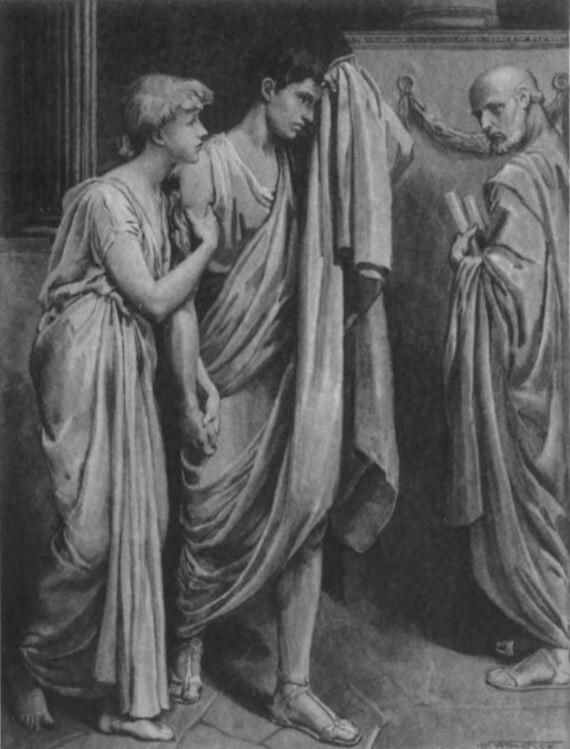
Table of Contents
"Lamia" in Text and Performance for Accessibility
Deeper into "Lamia
All About Keats